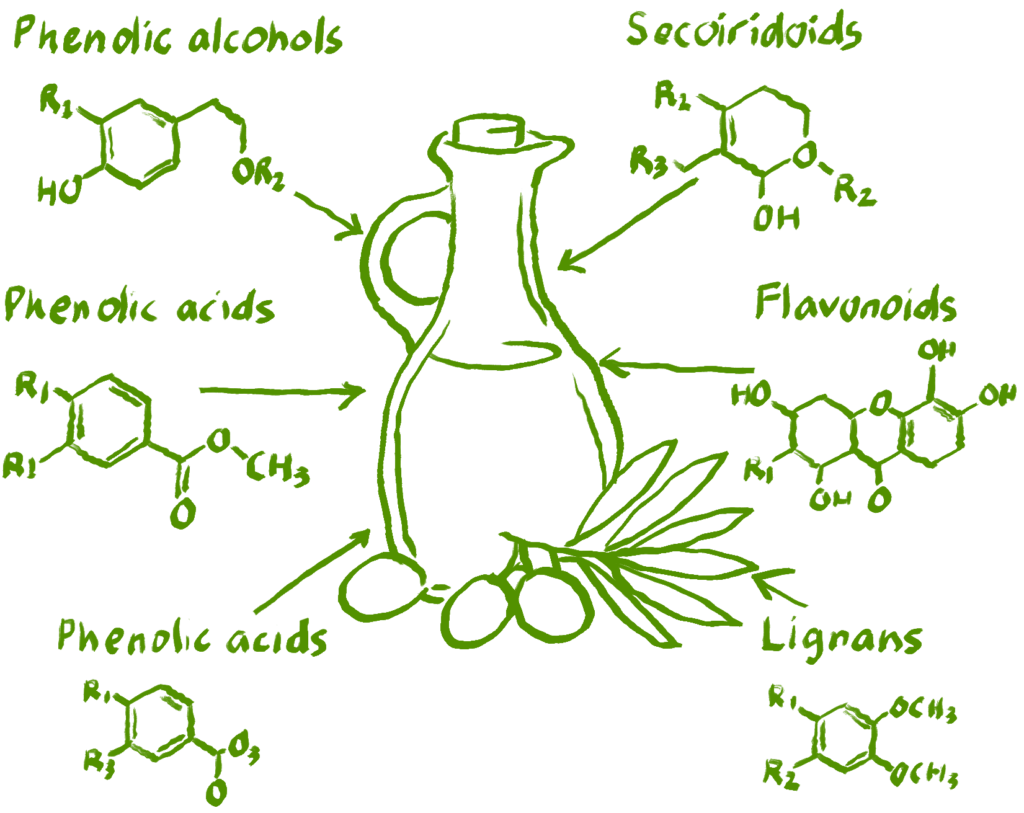
If you want to stack the deck against heart disease, high-polyphenol extra virgin olive oil (EVOO) is one of the most evidence-backed “small daily habits” you can adopt.
Not a miracle. Not a medicine.
But a daily upgrade that nudges key heart-attack risk factors in the right direction — and in one big clinical trial, it was linked to fewer major cardiovascular events.
First, what do we mean by “high-polyphenol”?
Polyphenols are the bitter-peppery compounds in fresh EVOO (think: throat tickle, green bite). They’re the part of EVOO that behaves like a plant-powered bioactive They don’t just provide calories or flavour — they actively interact with your body’s biology..
The EU even allows a specific health claim when the polyphenol content is high enough: olive oil polyphenols contribute to the protection of blood lipids from oxidative stress — but only when the oil provides at least 5 mg of hydroxytyrosol and its derivatives per 20 g of olive oil. European Commission
The big headline: fewer major cardiovascular events in a landmark trial
The strongest “real world” evidence sits inside the Mediterranean diet research.
In the large PREDIMED randomized trial (high cardiovascular risk adults), a Mediterranean diet supplemented with extra-virgin olive oil was associated with a lower incidence of major cardiovascular events compared with a control low-fat advice group. New England Journal of Medicine+1
Important nuance: this trial tested a diet pattern supplemented with EVOO — not “polyphenols in isolation.” But it’s a major pillar supporting EVOO as a heart-protective staple.
So how do polyphenols specifically help lower heart-attack risk?
Heart attacks don’t “just happen.” They’re often the end result of years of:
High-polyphenol EVOO targets several of these pathways.
1) It helps reduce LDL from the body from oxidative damage (a key step in Atherosclerosis, this is a slow, long-term disease of the arteries where fatty deposits (called plaque) build up inside the artery walls.
A major EUROLIVE analysis reported that olive oil polyphenols protect LDL from oxidation in humans — a mechanism tightly linked to cardiovascular risk. American Journal of Clinical Nutrition
This is exactly the biological rationale behind the EU’s approved health claim on olive oil polyphenols. European Commission
Good Oil translation: less “rusting” of LDL, less trouble-making cholesterol.
2) It can improve blood pressure + vessel function
In a randomized study, a polyphenol-rich olive oil intervention decreased blood pressure and improved endothelial (blood vessel) function in people with high-normal BP or stage 1 hypertension. PubMed
And even acutely (single serving), high-polyphenol EVOO has been shown to improve flow-mediated dilation (FMD), a marker of vascular function. ScienceDirect
Good Oil translation: your arteries behave more like a flexible hose, less like stiff plumbing.
3) It supports better “cholesterol behaviour,” not just cholesterol numbers
Beyond LDL oxidation, controlled research has linked olive oil polyphenols with improvements in lipid-related markers and LDL atherogenicity. PMC
There’s also RCT evidence pointing to polyphenols improving aspects of HDL function (the “quality” of HDL, not just quantity). MDPI
Good Oil translation: it’s not only how much cholesterol you have — it’s how that cholesterol behaves in your body.
What does this mean for your daily pour?
If you’re aiming for heart protection, the evidence points to these practical rules:
1) Make it daily.
Many studies and health-claim thresholds reference around 20 g/day (~1.5 tablespoons). European Commission
2) Choose EVOO that’s genuinely rich in polyphenols.
Look for stated polyphenol numbers, early-harvest cues, strong bitterness/pepper, and proper packaging/storage. (Polyphenols drop with age, heat, oxygen, and light.)
3) Use it like a food, not a supplement.
Dress salads, finish soups/veg/beans, drizzle over fish, whisk into yoghurt dips — don’t save the good stuff for “a special dinner party.” Your heart prefers consistency use it.
The bottom line
High-polyphenol EVOO sits in a rare sweet spot:
It won’t replace medical care — but it’s a powerful “daily lever” for cardiovascular risk reduction that tastes incredible while it works.
Ben & Lee
The Good Oil Club
The good oil, the good life