MYTH 1: Olive oil is not good for cooking
What people believe:
“Extra virgin olive oil burns easily. You should only use it raw.”
The facts:
Extra virgin olive oil is one of the most stable cooking fats available.
Why? Natural antioxidants (polyphenols) + a high percentage of monounsaturated fats = excellent heat stability.
Numerous studies show EVOO remains stable at typical cooking temperatures and produces fewer harmful oxidation by-products than seed oils.
Translation: you should be cooking with it.
Frying? Sautéing? Roasting? EVOO is your friend.
MYTH 2: Unfiltered oil is better than filtered oil
What people believe:
“Cloudy oil = more natural = higher quality.”
The facts:
Unfiltered oil contains micro-particles of water and olive solids. Those particles accelerate fermentation and oxidation.
Filtering:
- Improves shelf life
- Preserves flavour clarity
- Protects freshness
Most of the world’s best producers filter carefully, not aggressively. Cloudy oil isn’t better — it’s just less stable.
MYTH 3: Olive oil gets better with age
What people believe:
“Like wine, olive oil improves over time.”
The facts:
Olive oil is a fresh food product, not a cellar project.
From the moment it’s made, olive oil is slowly declining. The goal of great producers is to slow that decline, not romanticise it.
Peak flavour and health benefits usually sit within:
- Up to 18-24 months from harvest, depending on storage
Fresh is everything.
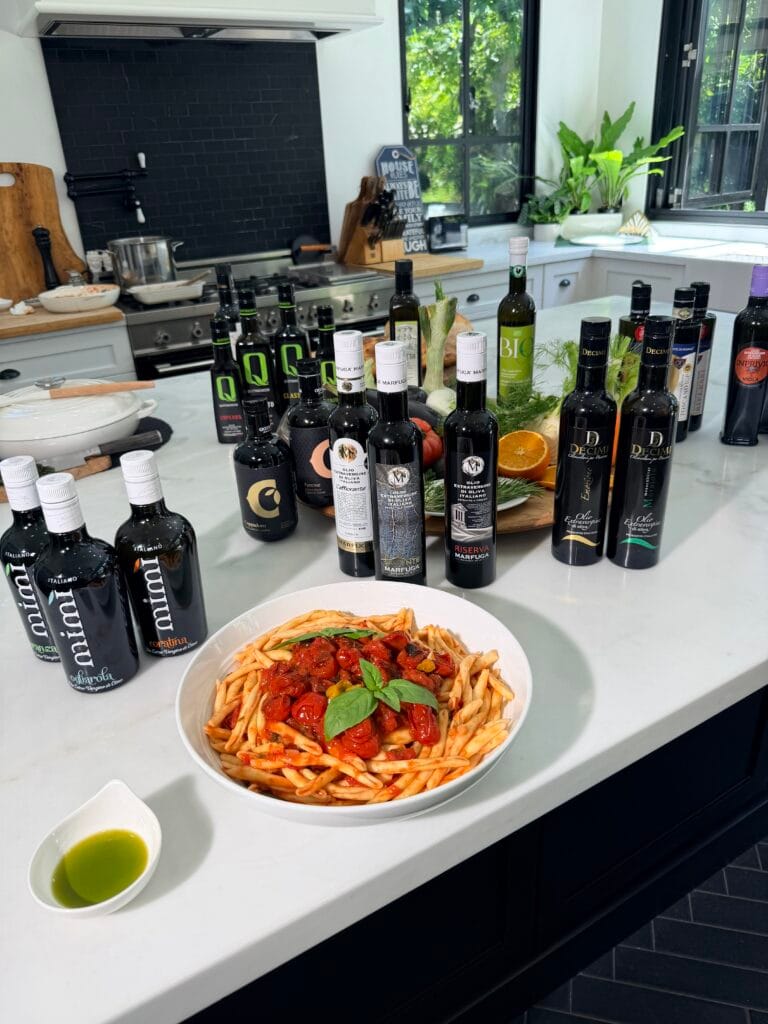
MYTH 4: Clear bottles are better than dark bottle
What people believe:
“If you can see the oil, you know what you’re buying.”
The facts:
Light is olive oil’s enemy.
UV exposure:
- Destroys polyphenols
- Accelerates rancidity
- Shortens shelf life dramatically
That’s why premium oils are stored in dark glass, or bag-in-box.
Clear bottles look pretty. They don’t protect quality.
MYTH 5: “First press” means higher quality
What people believe:
“First press = superior oil.”
The facts:
This term belongs in a museum.
Modern olive oil is made using centrifugation, not presses. There is no second or third press in real extra virgin olive oil production anymore.
“First press” is obsolete marketing language, not a quality indicator.
MYTH 6: Premium olive oil is just a cooking fat with no health benefits
What people believe:
“It’s just fat. Oil is oil.”
The facts:
High-quality extra virgin olive oil is a functional fresh food.
It contains:
- Polyphenols (powerful antioxidants)
- Anti-inflammatory compounds
- Cardiovascular protective properties
The EU even allows official health claims for EVOO high in polyphenols. Cheap refined oils don’t come close.
This isn’t just flavour — it’s nutrition.
MYTH 7: Bitterness is a defect
What people believe:
“Good oil should be smooth and mild.”
The facts:
Bitterness and peppery bite are signs of freshness and antioxidants.
That little throat tickle?
That’s polyphenols doing their job.
Flat, sweet, greasy oils are usually:
- Old
- Refined
- Stripped of nutrients
Bitterness isn’t a flaw — it’s proof.
MYTH 8: Supermarket olive oil is just as good as premium artisanal oil
What people believe:
“Why pay more? It all says extra virgin.”
The facts:
“Extra virgin” on a label doesn’t guarantee:
- Freshness
- High polyphenols
- Careful harvesting
- Fast milling
- Proper storage
Supermarket oils are often:
- Blended from multiple countries
- Old by the time you buy them
- Chosen for price, not quality
Artisanal oils are made by growers who control the process from grove to bottle — not spreadsheets.
The Bottom Line
Olive oil isn’t just oil.
It’s a fresh agricultural product with flavour, culture and health benefits — if it’s done properly.
At The Good Oil Club, we don’t trade in myths.
We trade in freshness, provenance and facts.
Once you taste the difference — you won’t go back
Ben & Lee
The Good Oil, The Good Life.