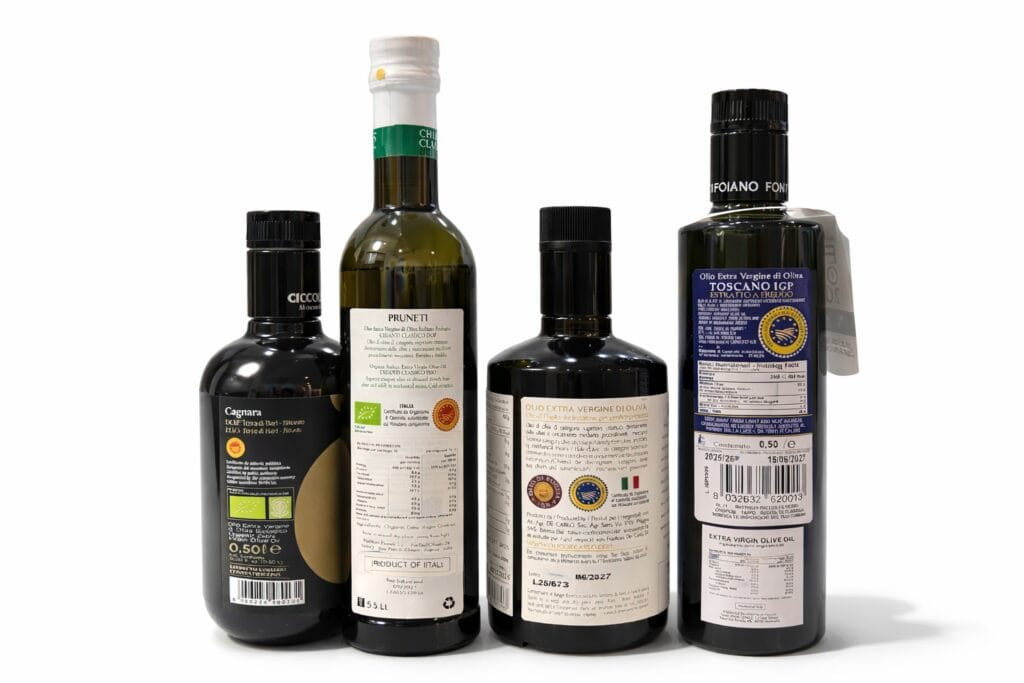
Because real quality isn’t an accident. It’s protected.
In the world of premium Extra Virgin Olive Oil, labels aren’t just marketing — they’re promises.
Promises of origin.
Promises of authenticity.
Promises of standards that protect you, the producer, and the tradition behind every bottle.
Europe takes this seriously. That’s why they created certification systems to guarantee that when you buy a bottle claiming to come from a specific region with a specific tradition… it’s the real deal.
Let’s break down the three big ones: PDO/DOP, PGI/IGP, and Organic — and why these symbols matter more than ever.
PDO / DOP — The Gold Standard of Authenticity
PDO (Protected Designation of Origin) — or DOP (Denominazione di Origine Protetta) in Italy — is the highest certification an olive oil can earn in Europe.
This isn’t just about geography… it’s about the whole chain.
To wear the PDO/DOP badge, an EVOO must be:
✔️ Grown in the certified region
✔️ Produced in that region
✔️ Bottled in that region
✔️ Made using approved cultivars
✔️ Crafted using traditional methods
✔️ Meeting strict chemical & sensory standards
This isn’t a casual “Made in Italy” sticker.
It’s a guarantee that the oil truly expresses the terroir, heritage and craftsmanship of its birthplace — from grove to bottle.
Think of it as the EVOO equivalent of Champagne:
If it doesn’t follow the rules, it doesn’t earn the name.
PGI / IGP — Regional Identity, With More Flexibility
PGI (Protected Geographical Indication) — or IGP (Indicazione Geografica Protetta) — protects products linked to a broader region, with slightly less strict requirements.
To use the PGI/IGP label, an EVOO must:
✔️ Have at least one characteristic tied to the region
✔️ Complete at least one stage of production within that region
This means the olives might be from a wider area, but some part of the magic — pressing, blending, bottling — must take place locally.
PGI/IGP gives producers room to innovate while still protecting regional identity.
Think of it as the bridge between tradition and broader agricultural practices, while still ensuring traceability and quality.
Organic — Farming With Nature, Not Against It
To earn the EU Organic seal, an olive oil must be produced through farming that respects:
soil health
biodiversity
clean water
natural resource conservation
Organic farmers must:
- Avoid synthetic pesticides
- Avoid artificial fertilizers
- Prioritise soil and ecosystem health
- Undergo strict inspections at every link of the chain
It’s not just a farming method — it’s a philosophy:
healthy groves → healthy fruit → healthy oil → healthy people.
Organic EVOO often comes from producers deeply committed to sustainability and long-term land stewardship. These are the guardians of the groves.
So… What Do These Labels Mean For You?
If you’re an EVOO lover — or a brand dedicated to true quality like The Good Oil Club — certifications give you confidence that the oil in your bottle is:
authentic
traceable
produced under strict standards
respectful of the land
high-quality at every stage
They protect the growers.
They protect tradition.
And they protect you from fake or low-quality oils flooding the market.
The Good Oil Club’s Take
We work with Frantoiani who respect the land, the fruit, and the craft. Most of them hold PDO, DOP, PGI, IGP, or Organic certifications — not because it’s trendy, but because they’ve earned it through generations of dedication.
When you open a bottle from The Good Oil Club, you’re not just tasting EVOO.
You’re tasting a protected heritage — preserving culture and backed by the certifications that keep it pure, honest and exceptional.
Ben & Lee
The Good Oil Club
The good oil, The good life.